Last updated: November 4, 2026
How much NAND prices rose in 2026
NAND flash is the memory chip inside every SSD. Contract prices are what device makers pay chip suppliers, and retail SSD prices follow them with a delay.
| Quarter (2026) | NAND flash contract prices, quarter over quarter | TrendForce forecast date |
|---|---|---|
| Q1 | +55–60% | February 2, 2026 |
| Q2 | +70–75% | March 31, 2026 |
| Q3 | +10–15% | July 3, 2026 |
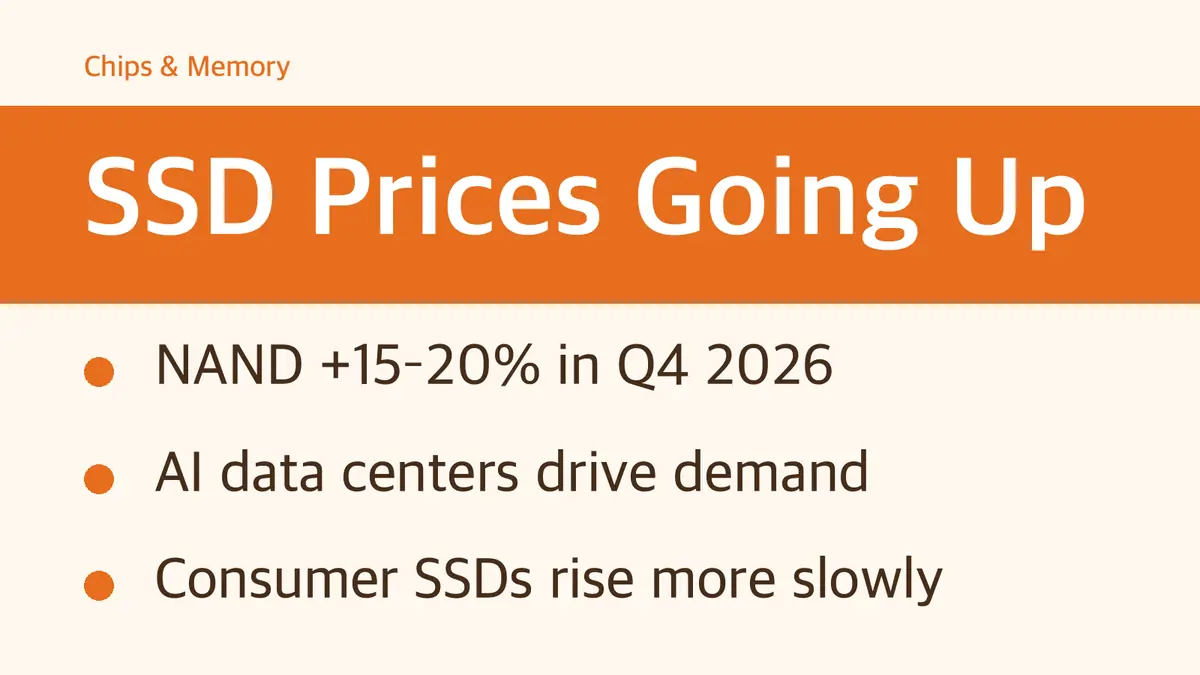
| Q4 | +15–20% | September 30, 2026 |
These increases stack. A chip that rose 55% in Q1 and 70% in Q2 cost well over twice as much by midyear as it did in late 2025. The smaller Q3 and Q4 increases are on top of that higher base.
Why SSD prices keep going up
1. AI data centers want huge amounts of storage. TrendForce projects enterprise SSD bit demand will grow more than 80% year over year in 2026 as cloud providers build AI inference systems. Agentic AI and vector databases need fast storage for real-time retrieval and caching.
2. Supply is already spoken for. Suppliers are adding QLC capacity and high-capacity drives, but TrendForce says most new supply has already been committed, leaving little on the open market. Cloud providers are signing long-term agreements to lock in supply.
3. Chipmakers are favoring DRAM. In early 2026, memory makers moved parts of their production lines from NAND to DRAM because DRAM was more profitable. That limited how fast NAND output could grow, so gains came only from process upgrades.
4. New factories take years. In March, TrendForce said meaningful capacity expansion for enterprise SSDs was unlikely until late 2027 or 2028.
Consumer SSDs: rising, but slower
The fourth quarter splits into two markets:
| Segment | Q4 2026 outlook |
|---|---|
| Enterprise SSDs (servers) | The only memory category where price growth speeds up from Q3 |
| Client SSDs (laptops, desktops) | Still rising, but suppliers are holding back increases |
| NAND wafers (sold to brands of USB drives, memory cards, budget SSDs) | Prices at record highs; module makers are buying cautiously |
Why the consumer side is calmer: PC makers stocked up in the first half of the year, so they're buying less now. TrendForce also says PC brands are cutting the SSD capacity in mainstream models to keep costs down. Retail channels are struggling to absorb wafer prices at current levels.
What this means if you're buying
- Don't wait for a big drop. TrendForce's forecasts show prices still rising through the end of 2026, and enterprise demand isn't easing. A return to 2025 prices isn't in any of these outlooks.
- Check the storage on a new laptop. With makers trimming SSD capacity, this year's version of a laptop can come with less storage than last year's at a similar price. Compare the full spec, not just the price.
- Buy the capacity you need now if you need it. If your drive is full or failing, waiting a quarter is unlikely to save money. If you're only upgrading for fun, prices may rise further.
- Upgradeable laptops and desktops are an advantage. You can buy a smaller drive now and add storage later, instead of paying a maker's upgrade price up front.
Sources
- TrendForce: AI Server Demand Sustains Memory Contract Price Increases in 4Q26 (September 30, 2026)
- TrendForce: AI Server Demand Continues to Support Memory Prices in 3Q26 (July 3, 2026)
- TrendForce: AI Server Demand to Drive Memory Contract Price Increases in 2Q26 (March 31, 2026)
- TrendForce: Memory Price Outlook for 1Q26 Sharply Upgraded (February 2, 2026)
Forecasts are TrendForce's as of their publication dates. Retail prices vary by brand and store.